

Late Ashfaque Uddin Ahmed : A man of faith, justice, and service
প্রকাশিত হয়েছে : ০১ জুলাই ২০২৬
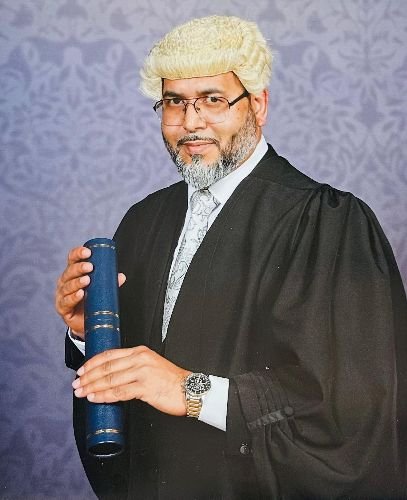
Written by- Mohammad Kamrul Hashan
Some people leave behind wealth. Some leave behind achievements. A rare few leave behind a legacy that continues to inspire long after their departure. Late Ashfaque Uddin Ahmed belonged to that rare category.
To some, he was a distinguished solicitor. To others, he was a respected community leader. Many knew him as a devoted husband, a loving father, a mentor, a teacher, and a friend. Above all, he was a man whose life was guided by faith, integrity, and a sincere desire to serve others.
Those who knew him often speak about different aspects of his life. Some remember his legal brilliance. Others remember his deep understanding of Islam and the Qur’an. Many remember his hospitality, generosity, and concern for others. Yet almost everyone who met him remembers one thing: his sincerity.
He never sought recognition for its own sake. Instead, he quietly dedicated himself to helping people, building institutions, nurturing future generations, and standing up for what he believed was right. Even today, conversations about him continue in family gatherings, community events, and private homes. His life itself became a lesson.
Early Life and a Defining Choice
Born into a respected and educated family in Routhgaon (Longla), Kulaura, Moulvibazar, Ashfaque Uddin Ahmed demonstrated academic excellence from an early age. His educational achievements opened the door to a prestigious career in the civil administration. Many regarded this as one of the highest honours a young graduate could achieve. However, he chose a different path.He believed that law and public service would provide a greater opportunity to stand for justice, help ordinary people, and contribute meaningfully to society.
After completing his legal education, he began practising law in Sylhet before continuing his legal career in Moulvibazar. His intelligence, diligence, and commitment to justice quickly earned him respect.
In 1976, he travelled to the United Kingdom for higher studies and professional development. Like many immigrants of his generation, he faced the challenges of adapting to a new society while preserving his values and identity. Through hard work and perseverance, he established himself professionally and eventually founded his own legal practice.
Throughout his career, he remained a source of guidance and inspiration for many younger lawyers beginning their professional journeys.
Political Commitment and Public Service
Mr Ahmed believed that citizenship carried responsibilities. His involvement with NAP (Bhasani) reflected his conviction that politics should serve people rather than personal interests. He worked alongside respected political figures including Maulana Abdul Hamid Khan Bhasani and Raja Shaheb. His commitment eventually led him to stand as a parliamentary candidate.
His interest in politics was never limited to elections. Those who spent time with him often recall long discussions about international affairs, economics, social development, and world events. His understanding of global politics was remarkable, and many younger people learned from these conversations. For him, politics was not about power. It was about justice, accountability, and improving society.
Faith: The Foundation of His Life
If one quality defined Ashfaque Uddin Ahmed more than any other, it was his faith. His Islam was not confined to words. It shaped his character, his priorities, his decisions, and his daily life. During the period when I had the privilege of gaining work experience under his supervision, I never witnessed him neglect congregational prayer. No matter how busy he was, prayer remained central to his life.
Whether at work or travelling, he would always ensure that prayer was performed on time.His wife recalls an incident from his youth when, during a long journey, he insisted on stopping for prayer despite the hesitation of older companions. His determination eventually encouraged everyone to pray.
His devotion was not limited to ritual worship. He possessed a deep understanding of the Qur’an and often explained Islamic teachings with wisdom and balance.
One lesson I personally learned from him has remained with me ever since. He would often say: “One verse of the Qur’an explains another verse.” This simple yet profound principle demonstrated his thoughtful approach to understanding Islam. A particularly moving story illustrates his faith and sense of responsibility. While his wife was expecting their first child, he travelled to Makkah. There he made a heartfelt supplication: “O Allah, I have left my wife and unborn child in Your care. Protect them as You protected Prophet Ismail (AS) and his mother.” This prayer revealed the deep love he carried for his family and the trust he placed in Allah.
During Ramadan, his devotion intensified even further. Social invitations were politely declined because he believed that the invitation of Allah deserved his full attention. Much of his time was spent in worship, reflection, and the mosque.
According to his wife, even after Fajr prayer, when he was fully dressed and ready for work, he would often spend additional time in voluntary prayers, including lengthy recitations in Salat ad-Duha.
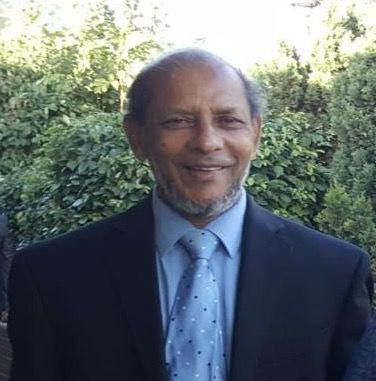 Hospitality, Family, and Human Connection
For more than twenty-five years, especially during Eid, Mr and Mrs Ahmed’s home became a centre of gathering for relatives, friends, neighbours, and visitors.For many families, Eid celebrations felt incomplete without visiting their home.Their hospitality extended beyond food and formalities. People visited because they felt welcome.
Their home was not merely a residence; it was a place of belonging. Relatives from both sides of the family found support, advice, and comfort there. Many who arrived in difficult circumstances found temporary shelter and encouragement.He and his wife built bridges between families and generations.
One touching memory was shared during his funeral. The Imam who led the funeral prayer recalled that when he was a young boy, Mr Ahmed would always greet him warmly whenever he visited their home. Such small gestures reveal much about a person’s character. His kindness was not selective. Whether dealing with a child or an elder, a professional or a labourer, he treated people with respect.
A Voice for Justice and Legal Excellence
Professionally, Mr Ahmed was highly respected within legal circles. As a Civil Litigation solicitor, he earned a reputation for meticulous preparation, strategic thinking, and strong advocacy. Clients trusted him because he listened carefully and fought passionately for their interests. His expertise became so well recognised that fellow lawyers often sought his advice on complex matters. One of the cases frequently remembered by those who worked with him was the Balagonj Samity litigation. The volume of documents involved was extraordinary, demonstrating both the complexity of the dispute and the immense dedication required to manage it. His legal career was not simply a profession. It was a means of advancing justice.
Community Service and Educational Contributions
Service to the community formed a constant thread throughout his life.Even during his early years in Britain as a student, he dedicated time to teaching Qur’an to children. Like a traditional religious teacher, he helped young Muslims maintain their faith and identity while growing up in a new environment. As the years passed, his contributions expanded. He helped establish mosques and madrasas in both the United Kingdom and Bangladesh.He supported numerous charitable causes, often quietly and without publicity.
In East London, he played an important role in efforts that ultimately secured the right of Muslim girls to wear the hijab at Mulberry School for Girls. Through persistence, dialogue, and principled advocacy, he helped ensure that young Muslim women could pursue education without compromising their religious identity.
He also served as Parent Governor in two East London schools, reflecting his commitment to education and the wellbeing of children.In addition, he was a member of SACRE (Standing Advisory Council for Religious Education), contributing to local religious education syllabuses. Through this work, he helped promote understanding, respect, and coexistence among people of different faiths.
A Dream Fulfilled: Woodford Muslim Cultural Centre
Among his many achievements, one project held special significance.For many years, Mr Ahmed dreamed of establishing a mosque near his local area around Woodford Green.
I personally witnessed the effort he invested in this vision. Meeting after meeting was organised. Discussions took place in community venues and often in his own office. He devoted enormous time and energy to bringing people together around a common purpose. At the time, there was no established mosque serving the local Muslim community in that area.He wanted future generations to have a place where they could pray, learn, and build community. By the grace of Allah, that vision became reality.
Today, the Woodford Muslim Cultural Centre stands as a lasting testament to his faith, determination, and leadership.It serves not only as a place of worship but also as a centre for education, guidance, and community cohesion. His example reminds us that sincere dreams, pursued with perseverance and trust in Allah, can become lasting realities.
Family and Legacy
Behind every great man stands a strong family.Mr Ahmed was blessed with a devoted wife, Mrs Hasna Hena Ahmed, a retired teacher from a respected family with a long tradition of public service. Her father began his career in the Civil Service of Pakistan and, following the independence of Bangladesh, continued serving in the Bangladesh Civil Service until his retirement in the 1980s. Today, Mrs Ahmed continues to carry forward her husband’s legacy with dignity, patience, and remarkable strength. Together, they raised children who embody the values of education, humility, faith, and service.
Their son, Hasan Samee Ahmed, is a Regulatory Affairs Specialist in the medical devices sector, holding degrees from University College London. He is married to Keshma Chowdhury, who also possesses distinguished qualifications in Biomedical Engineering. Their daughter, Dr Tahnia Ahmed, is a Civil Servant with a PhD and is married to Dr Almin Moin, a Consultant Paediatrician.The family’s educational achievements are remarkable. Yet perhaps more impressive than these achievements is their humility. Despite graduating from institutions such as UCL, Oxford, and Cambridge, the children remain grounded, respectful, and approachable. Visitors frequently comment on the exceptional bond between family members.
During Mr Ahmed’s illness, his son demonstrated extraordinary dedication and responsibility, managing family affairs with maturity and devotion, even during the period leading up to his own wedding. Many see this as a continuation of the values inherited from his father.
An Enduring Inspiration
Late Ashfaque Uddin Ahmed lived a life guided by faith, justice, knowledge, and service. He was a distinguished lawyer, a loving husband, a devoted father, a respected community leader, and above all, a sincere servant of Allah. He was also a silent worker. Many of the good things he accomplished were never publicly celebrated. Yet their impact remains visible today in the institutions he helped establish, the people he mentored, the families he supported, and the values he passed on. The memories collected in this article come from family conversations, personal experiences, and reflections shared by relatives, friends, colleagues, and community members. These are more than memories. They are lessons.
Even today, when people gather in his family home, conversations often return to him because his life itself became a source of guidance. His story reminds us that true success is not measured by what we accumulate for ourselves, but by what we leave behind for others. May Allah (SWT) accept his good deeds, forgive his shortcomings, elevate his rank in Jannatul Firdaus, and allow his legacy to continue benefiting future generations. Ameen.
Mohammad Kamrul Hashan : Non-Practising Barrister and Practising Solicitor of England & Wales, Advocate of the Supreme Court of Bangladesh, and Founder & Principal, Justice Aid Solicitors. Lodnon.
